Category Archives: observations generally

Morals and machines

This text is about guilt. More about that in the end.

Cars move alone, drones kill alone, robots are about to make their own decisions and AI goes shopping for us.

Whenever I read about this kind of stuff the most important question seems to be about the morals: What if the machine would do something wrong? What if the machine would cause an accident and kill people? Or what if a drone drops a bomb on my own house?

Yes. Exactly. What if?

Bullshit happens. With machine or without machine. Still there is quite the possibility that a machine does less mistakes than a human would do: A machine does not have emotions but decides based on an algorithm. This algorithm could be wrong in the beginning but will be fixed within the process. Nevertheless machines can make mistakes: Bad view, weird movements, similar shape etc.

For humans (to make mistakes) we need to add their mood, their mind, their general personality, their last meal and if they think they get paid enough for their job. But. Humans have morals.

So what the heck does this mean? It means that we are still looking for someone to blame if anything goes south. A machine won’t bother to be in prison, a machine is hard to blame for whatever it is that might have gone wrong. This means that we need to get used to the idea that bullshit happens with nobody around to blame. Nevertheless if the machine makes a mistake we can still blame the programmer behind the algorithm. At least for the time being.

It does not feel right to get killed by a machine. Still this is because of the idea of guilt and blame. The dead ones are dead. So it is about the ones left behind who need to deal with what happened. I wrote about this before and it is a difficult topic. It should not stop us from using AI wherever we can, Because AI will do a better job and less mistakes just because it is NOT human.

evolution… please move on!

It is late 2019, the summer comes to an end and a new chapter for mankind is going to start. The scientists and politicians changed their ideas about what was going on and what needed to happen to stop it over an over. At the beginning it was written that the virus is not worse than a cold and then it changed to become the killer within. Some people lost their trust into science and politics. No surprise there.

Science also has an issue with modelling society. This comes as society is more than numbers and tables and rules. And then there are the news! News need to be told and if there are no real news we tell the old ones but make them a bit worse! Bad news sell! 2 years since then and 2 Chinese and 2 European vaccinations later i am still here. Others were less lucky.

Then came the thing we used to call war. And it was a war of information and a power play between all the powers and the Ukraine in between. The president of Ukraine asks his people to fight and to learn how to fight. Nobody in the west complains about that as if is normal that normal people fight as soldiers. Generally tough to tell who the good guys and the bad guys are.

The war went on and more humans were killed. Who counts them? War is a monster and everyone knows that by now. War feeds on itself and creates more monsters. Monsters do what monsters do and nobody should be surprised.

The ones in power tell the story. It was always like that. The ones who pour the blame now were the ones to be blamed if there would have been anyone strong enough to do blaming. Europeans feel with their neighbors and the people of Iraq and Afghanistan and Chechnya are wondering if the Europeans should see a psychiatrist. Dissonance disorder is a serious thing!

3 year that surely taught us one thing: Evolution! Move on! This kind of human can´t be the end. For many reasons.

Developing story

A few weeks ago I was talking about what could be a general rule for humans to be able to deal with one another.

If we start with the idea that humans can do whatever makes them feel good as long as they do not hurt anyone on the way making us feel good, then all is good. Or not. If we even say that this rule is not only for humans but for all animals and life out there, we are screwed even more.

Whatever we do there is always someone or something that will suffer based on what we did to make us feel better. We eat, we love, we live. If we eat something else needs to die. If we love someone else is not loved. If we live the life we are living half of the planet is missing this life. The list is endless.

The idea to not hurt anyone or anything is obviously impossible to realize. What else then?

Time changes. Knowledge changes. The human is the animal that controls the planet. (Until a stupid virus comes along…) While we are running the show we learn that we are not that special as we thought we are. Like all other animals we are running behind a development nobody ever was discussing or analysing: future happens. Curiosity pushes humans in the future to come.

So. Maybe. It is not about happiness at all. For nobody. Maybe it is not about living a good life and feeling loved and needed. Everything around us is not like that. Why should the animal human follow this idea?

Human ideas like good and bad, gods and demons, souls and the free will slowly fade into the darkness of the past. If we look at all the findings of science during the last decade – it cant be about us as perceived individuals.

But what then? What if nothing really matters anymore? Maybe the movie Matrix was not the nightmare it seemed to be after all. Maybe this would be the only way to give all humans the same reason to live without hurting anyone or anything else. Maybe we do not need to go that far. It might be enough to realize that the universe does not revolve around us. At all. And while realizing that we might show some respect to everyone and everything around us. All living things are prisoners of this round space-racing cosmic bubble.

The Arab-Israeli Conflict: A Brief Introduction

The Arab-Israeli conflict is a 100-year-old issue. It all started when Britain took over Palestine after the Ottoman Empire was defeated in WWI. Palestine was in fact inhabited by a Jewish minority and an Arab majority, but the tension between the two increased when the international community gave Britain the green light to establish a “national home” in Palestine for Jewish people.

For the Jews, they considered Palestine to be their ancestral home, but Arab Palestinians also claimed it as their land and refused to leave. Between the 1920s and 40s, the number of Jews arriving in Palestine grew immensely, with many escaping the rise in power of the Nazis in Germany, far away from persecution, and seeking refuge after the Holocaust of WWII. This consequently resulted in violence between Jews and Arabs of Palestine, as well as a revolt against British control.

Trying to find a solution, the British suggested the Peel Plan; to create a very small Jewish state and a much larger Arab state. The Jews accepted the plan, however, the Arabs turned it down. Soon after, the British issued the “White Paper” to limit Jewish immigration to Palestine.

In 1947, during the aftermath of the holocaust which resulted in 6,000,000 Jews killed by the Nazis, the United Nations (UN) voted for Palestine to be split into two states; Jewish and Arab, with Jerusalem being an international city. The Jewish leaders accepted the plan but the Arabs didn’t and the plan was never implemented. In 1948 unable to solve the problem, British rulers left Palestine and Jewish leaders declared the creation of the state of Israel. This is when the catastrophe began.

The Jews later managed to gain a lot of control over most of the territories that were given to them by the UN. It was during this period when the first Palestinian refugee crisis was created, or what is called “Al-Nakba”. Hundreds of thousands of Palestinians left; some left due to a fear of what the Israelis might do to them, some were no doubt forced to leave or expelled by the Israelis themselves.

On May 14th, 1948, the State of Israel was declared, and soon after that, the neighboring Arab states attacked Israel. The following year, cease-fire agreements were signed between Israel and neighboring Arab states. However, by the time the fighting ended, Israel controlled most of the territory. Jordan occupied land which became known as the West Bank, and Egypt occupied Gaza, Jerusalem, on the other hand, was divided between Israeli forces in the West, and Jordanian forces in the East.

Since there was never a peace agreement, each side blamed the other. More wars and fighting took place in the decades that followed.

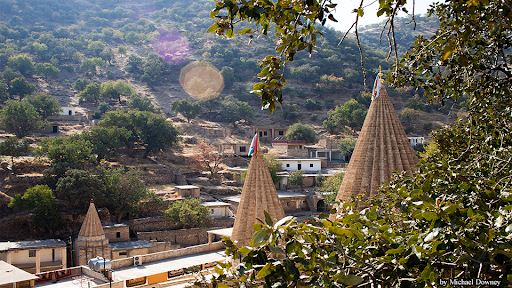
Inside Lalish: The Mountain Valley and Holy Sanctuary of Iraq

Let’s start this article with a question, what’s the first thought that pops into your head when you hear the word, Iraq? Let me guess, Saddam Hussein? oil, explosions, death, trauma, it can really be anything. Iraq has been only perceived as a war zone. There’s this 18-year-old image that only displays chaos, sadness, and tragedy. It’s time to divert from it and see the other side of Iraq. Yes, war scars still exist, but there’s so much more to learn and understand about Iraq’s cultural and religious diversity, rich ancient history, and the countless hidden gems waiting to be explored.

So, since I’m extremely interested in exploring different religions, I came across a piece written on a village in Nineveh, Kurdistan named Lalish, and what struck me most about it, is the fact that this village is actually home to the holiest temple of the Yazidi faith – a quick summary on Yazidism “it’s a monotheistic faith based on a belief in one God who created the world and entrusted it into the care of a Heptad of seven Holy Beings, often known as Angels.” 

Modern research has clarified that the name Yazidi is taken from the modern Persian word “Ized”, which means angel or divine being, so Yazidi simply means worshipper of god, which is how they describe themselves.

Yasdan is their holy supreme, and he’s considered to be on such a high spiritual level “the Creator of the world” that he can’t be worshipped directly, and since he’s considered the creator and not the preserver, there are seven spirits emanate from him to govern, one of which is considered the greatest, is the Peacock Angel or Malak Taus; the executor of the divine will. His other name is Shaytan, in Arabic means the Devil, and this has actually led to the Yezidis being labeled as the “devil-worshippers”.

Yazidis pray to the Peacock angel five times a day, and they believe that souls pass into forms of transmigration and that slow purification is feasible through repeated rebirth which consequently makes the concept of Hell unnecessary. However, the worst thing that can happen to a Yazidi soul is to be expelled from his/her community. As it means that their soul can never progress, therefore, converting to another religion is not even an option.

The majority of Yazidis today live in disputed territories of Northern Iraq, mainly in the Nineveh and Dohuk, with a large Yazidi community in Germany, North America, Turkey, and Syria as well.

Before you enter the ancient village of Lalish you’ll find a check-point at the gate, with guards asking you to take your shoes off. It’s a tradition to enter the village, which mainly consists of a complex of temples, barefoot. You might think it’s odd to be walking around an entire town barefoot but the stone streets are smooth and clean, and it’s an experience that one should definitely not miss. 

Narratives say that for Yazidis, Lalish’s complex of temples is considered the holiest place on earth, as they believe it is where Noah’s Ark first hit dry land after the flood, therefore the birthplace of the new civilization. And so they’re expected to make a pilgrimage to the site at least once in their lifetime and drink from the holy spring water. So in other words, Lalish is to the Yazidis is what Mecca to Muslims or what Jerusalem is to the followers of Islam, Christianity, and Judaism. Lalish is, by all means, the holiest site to this minority faith. 

Yazidi faith is a combination of Christianity, Islam, and Judaism, only pre-dating them by around 1,000 years. It also has segments of Zoroastrianism, Mesopotamian rituals, and some Sufism. However the religion is very misunderstood that it’s often equated to devil worshipping and the reason behind this belief is unlike a member of the three great monotheistic faiths which consider the devil as an evil angel, Yazidis believe the contrary; that he was in fact forgiven, “his tears of redemption extinguished the fires of hell”. This was one of the reasons why ISIS perceived them as apostates. 

In 2014 ISIS militants attacked the province of Sinjar in northern Iraq -a historic heartland for Yazidis. hundreds were killed, thousands were kidnapped, and half a million were displaced. According to the UN in 2015 the attack was described as a genocide, and an UN-funded international investigation was launched to look into ISIS war crimes in 2018. More than six years have passed now, yet Yezidis still face immense challenges; 250,000 still live in camps in Kurdistan and Syria, over 100,000 migrated out of Iraq, and 3,000 are reported missing.

One of Yazidis’ core and actually difficult pillars of their faith is that they are extremely tied to their land. All of their rituals are tied to Lalish; from the baptism in the waters of the sacred springs to the festivals like the new year which they celebrate in Spring all take place in Lalish. So you can only imagine their displacement and forced mass migration is hurting them deeper than losing one’s home. 
not to be

life passes. in times pretty fast. Some believe in an afterlife, some say that they don´t care. The ones who don´t care usually say that it did not hurt before they were born so why should it hurt afterwards. The believers find their way to the afterlife in following rules which come from a different or imagined world.

Did it hurt before? Will it hurt afterwards? There was no before. And as there was no before there won´t be any after. Pain is something felt while being. So there won´t be pain.  As there won´t be anyone to feel it.

The pain is not the issue anyway. Not to be it is. And as we are now we don´t care about the time we were not. We care about the time we will not be.

We think about not being while we are still there. We do so because we might hope to find a way out. The thing is that there can´t be a way out as whatever way out there could be would mean the end of life generally. This as there won´t be any development any more.

So we have this one chance to live and to feel alive. And to give other people around the feeling to be alive and to use this life as long as it might be. We as what we are will leave traces anyway. We are part of something way bigger than us and this something will be there and will have our traces once we are long gone. At least until the unimaginable happens and everything finally gets cold and dark.

So we got this one chance in the here and now. Even if many people before got the same chance we can still feel good about it. Life is great. Death will happen soon enough so better to fill the life with thoughts that make us feel good. In the end we probably won´t care anyway as we had a life that mattered – for whoever.

being alive. or so.

We think so we are, someone said. But what are thoughts? And even if we think are we what we think we are? Are humans as special as they think they are?

On the one side I think surely yes. As humans are the only ones who can use their mind to develop stories way beyond reality. Only humans have a thing called religion and only humans are afraid of monsters and aliens. So. yes. special.

But.

A thought seems to be something which is based on electrons moving along certain routes in our brain. Our senses are able to see the world in a certain way. Based on what the senses sense a signal is sent along a nerve until the signal is strong enough to trigger an action in the brain. No need to understand completely what happens then. The only thing we need to understand is that the thing out of our brain is a thing that talks to another thing (nerve, neuron or electron) in order to move many things (thought). So the connection is between the thing outside of our mind with a thing inside our brain. So a thing connects to a thing to trigger something we call thought. What the trigger from the outside does to the inside is based on the individual story of the thinking brain. This and the genetic coding makes the difference. Besides the genes all the rules in the brain are learned or experienced (language for example).

So a thing talks to a thing based on rules we had no control over. And all this makes then the thing we call thought.

Emergence. Of course. The outcome is more than just the sum of the parts. It is said. Emergence is only described by humans. It is the human mind that sees these things based on the ability of the human mind to fantasize. The human mind needs proper boxes with things inside to be able to function. Each box is labeled with its content like “society”, “home”, “family”. This goes well as long as nobody asks to open the box and to take a deep look inside. In these boxes there are other boxes and in these boxes there are other boxes, until nothing is left. The human mind works with labels which stand for certain ideas about something. These ideas are mainly based on the culture the mind was taught to function in. Emergence is one of these ideas. There is no thing called “society” or “religion” or “me”. All these are just labels on mainly empty boxes.

So I am sitting here and writing and saying at the same time that it is not me who does that. As weird as it can go.  It is me. But. I learned a certain language which gives me certain rules to put things into words. The style of writing is mainly owed to the authors I read before,  and same for the the knowledge in my mind. My emotional world is based on the genetic set and the mainly uncontrolled reality I find myself in. I type on a keyboard and see what i wrote. While reading another thought emerges based on what my eyes see on the screen and what my mind makes out of it. Sometimes i make a brief stop to find the words for something that i want to say. The wish to find the words for something is based on the evaluation that something is wrong or missing. This evaluation is done based on the set of rules in my mind. This set of rules says the argument needs to be logical and consistent. So it is the things in the past and the things happening now triggering certain reactions which make my hands write what I write. Still I am not a machine. At least not a simple one. And if one then a special one which changes its source code all the time.

But even if i know better, i  cannot not feel like a thinking thing. This makes things tricky.

once we are not

…and the short time in between we are. There are aeons before and aeons might follow. And we did not care before nor will we care afterwards. It is said. This would mean that back then there was a me that used the senses and the mindset to realize an environment. As far as I can tell there was no me nor any sense. This argument triggers the next question: What can i remember? But first the question if we should care about what was before and what might follow.

No.

Everyone´s personal story started the moment the senses filled the mind with information. This is the information we remember or we don´t remember. The decision if there was a time which was painful or not depends on the things we are able to remember. What we are able to remember is strongly connected to working senses. The moment we are not are no working senses anymore. So the argument is nor valid as there was no me – back then.

Now we are. Now we have senses which fill our mind. And of course it is not nice to let something go as precious as this. It might not bother us once we are gone, true. But this only because we are not and can´t evaluate the situation anymore. So we tend to spend a lifetime to be bothered about this moment in which we will lose the ability to remember. And hell yeah! It is fuckin´spooky!

There is no solace to offer. There is this one life we have to live in the best way possible.

ping and pong…

trend and antitrend… there is no way to predict the future but to expect that things might change against the temporarily existing trend. The world is complicated and therefore it is difficult to predict any kind of further development.

We live in the now and here. Our past is stored in books and in our mind, but it is gone. Eaten by the Langoliers. The future is not done yet. While being in the now we create the then. It is a steady stepping forward and a steady creation of then.

Things happen and happend. These things have a direct influence on the now. The human mind can only deal with a certain number of issues at a given time. Futhermore has the human mind some severe issues deciding what it should focus on and what not. Normally the human mind goes for the screaming, flashing, colorful things, to speak in metaphors. The silent things are neglected, but nevertheless they happen. Nobody is able to see these silent things and to draw them into account. Humans are never able to see the complete picture, how hard they will ever try to do so.

Therefore… the future is the future. We will meet it if we arrive there. We can wish things and we can try to float into a certain direction – as a person or as a society. But we can never ever say how it will be. We can’t even tell that if we behave in a certain way, if we do certain things, that this and that will happen. We can’t look onto the CV of Steve Jobs and say: “Ha, let’s go for it!” If it would be that simple…!

People earn a lot of money claiming that they know the future, that they have the tools to predict the future. And other people are eager to believe them as humans generally are seeking for safety through knowledge. If we know the future we can prepare for it. Unforunately we can’t know, we can only act to achieve something in the now, without knowing how it will evolve.

me?

This text questions the idea that there is such a thing like an individual identity. The thoughts hereby are based on the authors observations (for many things one just needs to LOOK…) and the work of Tim Ingold, Ernst Mach, Daniel Kahnemann, Benjamin Libet and Humberto Maturana, all of them as the maybe most influental source of thought inspiration for me. Among many others. Uncountable others.

Uncountable others not only for the reason that the things in the head did not grow there but were achieved through the lifetime. The brain is the organic part that creates thought based on previous experience. And experience is an ongoing process which affects the thinking world.

Inspiration! Some people might respond concerning the authors last claim. “What about inspiration? What about new ideas?” Did these things not grow in ones brain without previous examples or experience? The author dares to answer: There is no such thing as pure inspiration, as the pure idea, as the thing which only comes from within. One can move things in the mind one has names for and one knows. It is possible to move these things into new positions and confront or combine them with other things of knowledge and with names. Sometimes this happens in the mind and sometimes we do it while doing – the painter who starts a painting and follows her intuition to develop it for example.

Given the agreement that the brain processes information it got from outside: what happens to this information? It is alternated according to new knowledge and new experience which again comes from outside. As an example: If a person moves from one context into another (from Bejing to Cairo) this relocation will influence the very behaviour of the person. One adapts subconsciousness to the new circumstances and behaves in new ways. The described thing is already valid in small changes, like relationships for example: One becomes a different person according to the the phase the relationship is in and to the person it is to.

All this just to illustrate that the human mind is a fluffy thing – no identity valid for now and forever. (as long as one does not stick to the exactly same living circumstances all life long; this might result in a stable personanlity caused by the lack of stimulation and without defining a real identity as the stimulus could always happen.)

So, the knowledge comes from outside, the experience comes from outside, the stimulus come from outside. Nothing left to come from inside but the processing of influx – and hereby everything is processed subconsciously before reaching the light of consciousness. The human brain is a processer of infomation which comes from outside. All identity is based on this information. So one might say all identity comes from outside and always is outside. A Person is not a defined thing but an individual whoms identity is re-created every new moment of interaction. We are not in state of being what we are but in a steady state of becoming who we will be.

Some might feel a bit dizzy accepting the proposed idea. If we accept the preciously mentioned we need to see the world with different eyes. It is not any more the individual who is in charge for the very behavior – it is more the environment. And the environment is also nothing defined and nothing with a consciousness. Panta rhei. No. Not rhei. Panta ebullio. It is a steady bubbling and boiling of things which dictates and creates the float of everything.