the thing with doors

A space is often filled with something.

Sometimes the space itself as well as its only content are ideas. Different ideas though.

The space might be defined by a certain culture or habit or general circumstances. The idea might be very alien to the space or might be grown within the space.

To organize ideas within a given space a practical thing is a room with a door. All ideas which belong to a particular topic are shoved into this room and a sign is put on the door: Everything about me. For example.


Now. There are these special ideas. These ideas come from an area there no spaces nor doors are known, an area which is as old as mankind itself. An area which is not affected by spaces and doors.

These ideas have a special room. A special room with a special door which is always locked and not to be opened by all means.


The one who decides (if there is such a thing as “to decide” – which I personally strongly question) that the door is to be kept closed and locked is the individual: the keeper of spaces. The door is kept shut for the simple reason that an idea can spread like a virus. The idea will infest the space and will change its very structure: the space will be sick. Sick is how people which are used to share the same space will call the infection.


The sick idea could transport a belief, an emotion, a very thought or everything else which could be expressed in language. An idea which can’t be expressed is not infectious. An idea which cannot be expressed can’t spread. Much more dangerous are the ideas which might be formulated, the ideas which might spread and develop into a disaster. Disaster will strike if the organism itself (the culture, the environment, the society) deals with the idea like an immune system would deal with an infection: It is fought until its gone.

Like the immune system collateral damage within the space itself is likely. It is also likely that the immunes system starts to fight the body and that it develops anti-organism to keep the structure clean in the future.


All humans know this immune reaction since the very childhood. Not everything can be done or can be said or even thought.

The immune reaction of the organism will be even stronger, if the threat is higher and the idea is shared by individuals. A shared idea which might be seen as alien to the overall thinking space is the worst case scenario and needs to be combated with all possible means.


This is why some ideas are kept locked up. A time might come for these ideas as well. Nothing is forever. Things change. Slowly, but they change. Already this thought could be perceived as a threat.


A priest or a therapist are among the only persons an individual might be able to share an idea with because there won’t be a threat for the individual itself or the individuals the idea is shared with. This only works because a priest or therapist are not allowed to spread the idea by law. These professionals need to keep the idea and therefore there is no threat and no immune reaction. Nevertheless a graveyard of ideas. Dead but alive.
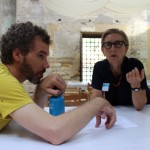
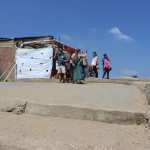
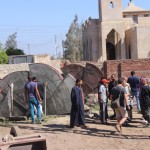
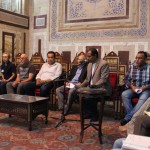
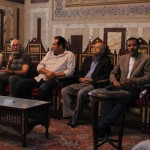
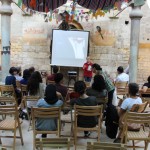
A workshop in Cairo and Sharqeyya

The borders within Egypt…

..are not the ones religious against secular as suggested by most of the western media. The borders are constructed along the same dividers as everywhere else: between rich and poor, between upper class and lower class, between education and no education.

The protests at the Egyptian universities at the moment emphasise this assumption. While protests enflamed at almost all public universities throughout Egypt, the private universities are relatively quiet.

So even if it looks like a struggle for freedom it is rather more a fight between a few rich against the vast majority poor people. If the majority of the few rich people would really care about the situation – it would be easy to solve. And it would be a sustainable solution.
Maybe it is already a fact, that the majority of the rich people would like to support the poor and to bring the country forward. Then the question is, why it does not happen.

A possible answer is, that there is worldwide no transparent structure which enables one to hand down some of his/her own wealth. It is not that easy that one can give something to the next person one meets. A supply structure needs to be more complicated and more thoughtful.

Something to work on.


let the machines rule!

Matrix… a nightmare? Equilibrium an insult to human values?

Maybe yes. Most probably not.

Meanwhile humanity could have figured that they are not the very best to control the planet nor at least themselves. One just needs to take a look and see. Throughout the history. Big brain or not – things are developing to the worse.

Reasons for this misery? Well, maybe: Humans are emotionally controlled beings without the inner capacity to control their emotions nor to see or to plan for the big picture. Like any other being on this planet humans prior aim is to survive and to reproduce. A big brain takes its toll by making all these basic things a bit tricky: For humans it is not enough to climb on a tree or to hunt a giant vegetable. Humans need more to compete. And humans need more to feel in a state of being compete-able. And then there are all the other humans who want the same or, even worse, something completely different.

So the big brain needs to develop strategies to compete with others in a complex world. Always driven by ancient needs and wants.

It is easy to see there all this ends up: Distinction of humanity.

Who cares? Maybe nobody.

If there is somebody who cares – for whatever reason: Let the machines rule! Humanity is not able to  care for themselves. We need help!


so the brain makes the difference…

…to all the other being out there. Mainly.

Then: the question about the effect of one’s ability to explain things onto the reality! As the brain is the organ which constructs this reality we need to say: perceived reality.

The question if the ability to explain reality makes any sense can only be answered if we are going to introduce a level beyond the biological processes; means: the organic behaviour constitutes a world above the organic behaviour.

This is what happens: Out of the uncountable realities out there the human mind makes one, shared by almost all humans. This particular reality floats on the organic behaviour. The organic behaviour is the source of this reality but not its content.

Thus: If one is able to explain the organic behaviour it won’t have any effect (but maybe a psychological one) onto the constituted reality. This is valid as long as nobody is going to intervene in the organic behaviour itself. (Of course this is something that might already happen in many different ways!)

But: The perceived reality is not independent from the organic structure. The organic structure is the source of all mind-work. One might conclude: The organic behaviour does not affect the reality as long as it works properly. If the organic structure is affected or even dead the mind loses its base. The perceived reality is only affected in the extremes: death and birth. And only in these moments the question if the ability to explain things alters them makes any sense.

Love, hate, joy, sadness, grief… are also extremes. Emotions apart from the common ones. They also alter the perceived reality. And these emotions grow strong because of the ideas they are charged with. And ideas happen in our mind.

Conclusion: as long as our mind works the things are real. If it stops everything is gone. This makes some ideas maybe even more precious.

being human

A shift of positions. Normally I prefer the other side. But as a seeker of the never available truth sometimes it is needed to adjust the point of view. For a moment.

So: We know pretty well what kind of mechanisms keep the human individual as well as the surrounding society running. We are able to quote the latest research of the human sciences, psychology, biology and neuroscience as well as the social sciences, system theory and anthropology. Humanity is able to explain many things in the world; of course: only how humanity perceives the world!

Nevertheless: Is the perceived reality altered just by the ability to explain what was perceived as the mechanical process behind the reality? Means: Is a term like “love” losing all its credits just because one is able to explain how it works? It the color red no longer red just because one is able to say a few words about light and perception?

What is it, that we know? Or, the older question, what is it that we are able to know?

To answer this questions is not relevant here because we will stay on an abstract level there the question of the reality behind the human senses is not touched.

It is a thing between humans: Humans are and humans perceive themselves while being. Humans describe what they see and what their context enables them to see. On this level this is the only thing that counts.

What makes one human? What are the big values humanity appreciates? Many items in the value-box, depending on where one lives and dies! So the values are kind of flexible and nothing written down in the ancient book of absolute truth. Then: What is it? What makes humans special?

Many questions raised. To sum it up: Just because we are able to explain how it works does not make humans less special.

Well…

Ok. So 2 items to discuss. First: Is the question of being true despite being explained of any relevance or does it even make any sense? Second: What does special mean in this context?

The second question is easier to answer. Being special means being different. Different to what? With all our bacteria, tissue and bone and blood and horn: where is the main difference to any living thing out there?

Of course: the brain makes the race. Humans are smart. (They uses this smartness to deconstruct themselves and their world… just as a side comment) The big brain is the main difference to all the other things out there.


…will be continued after a thinking break….


cause and effect

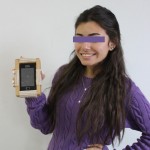
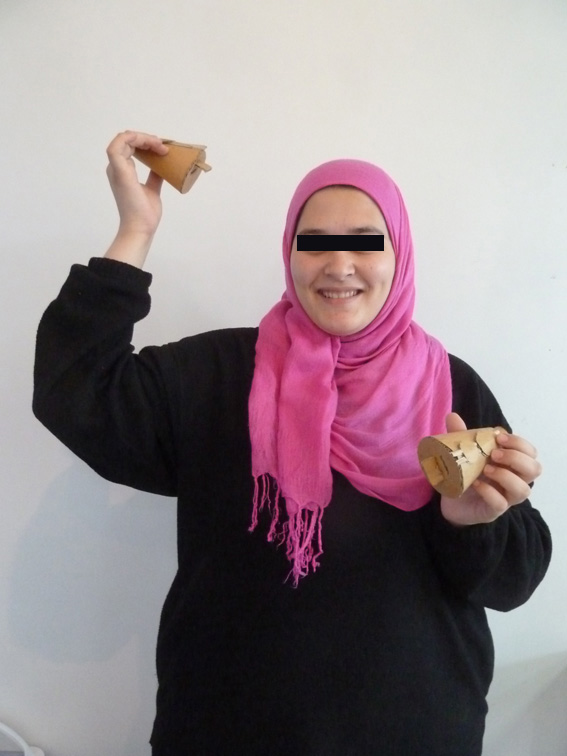
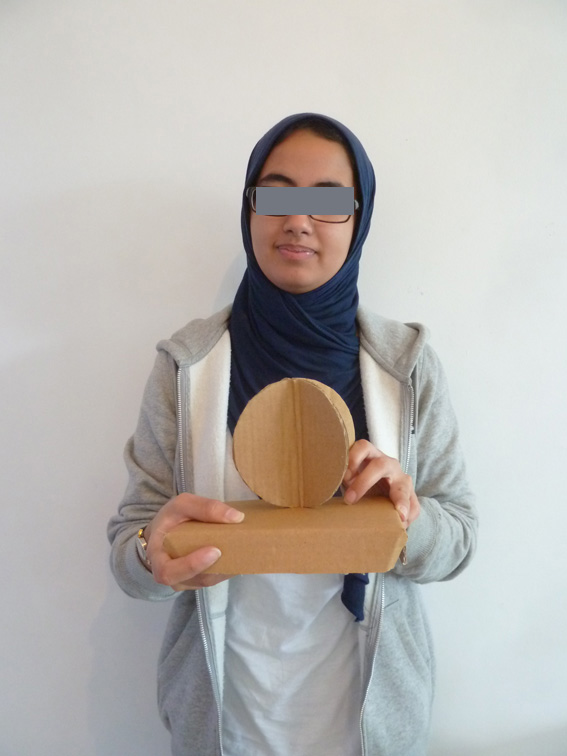
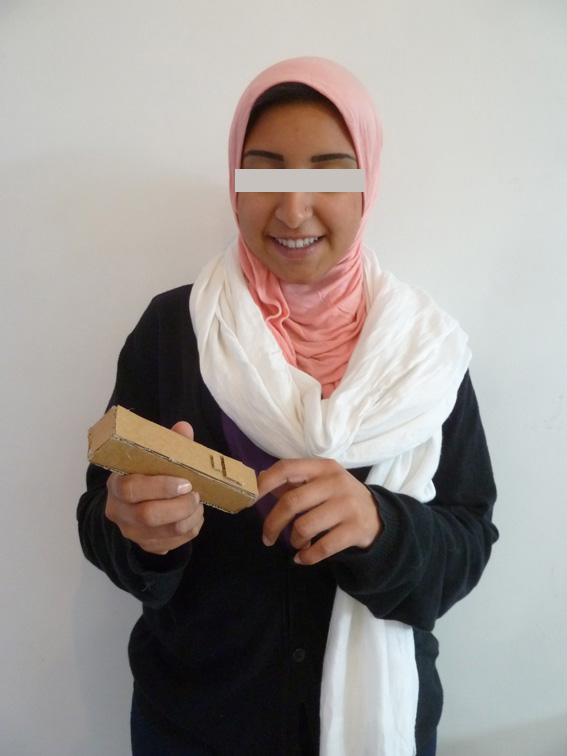
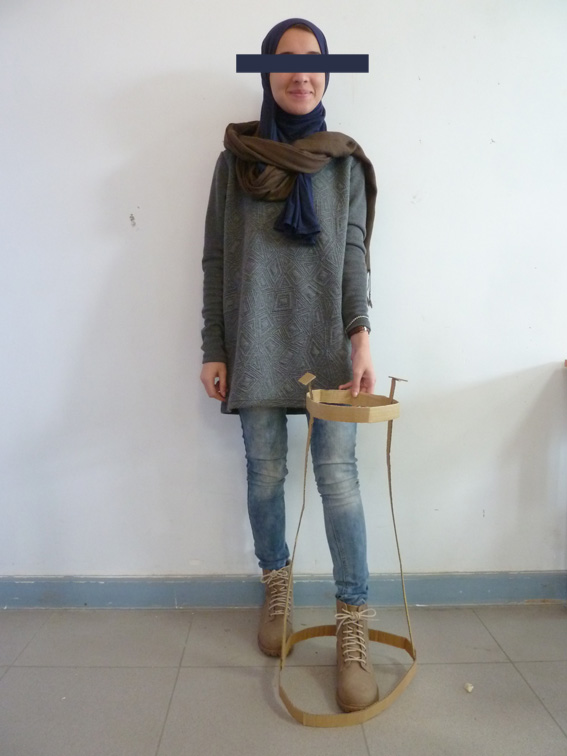
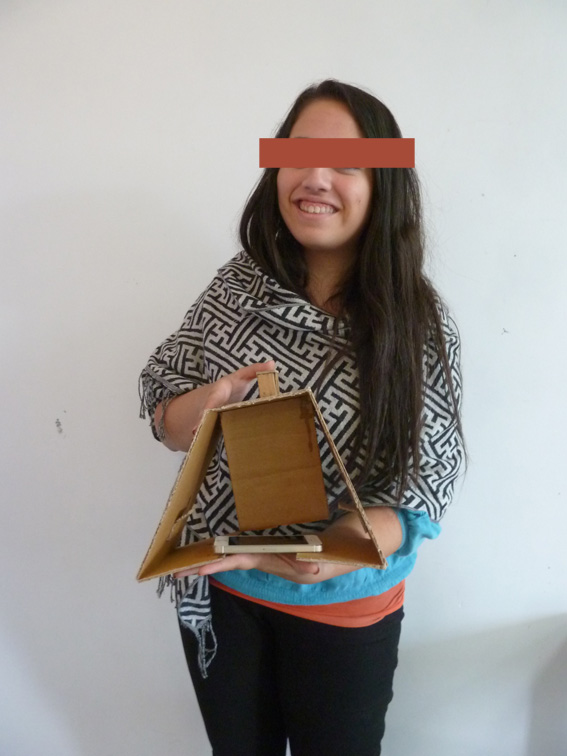
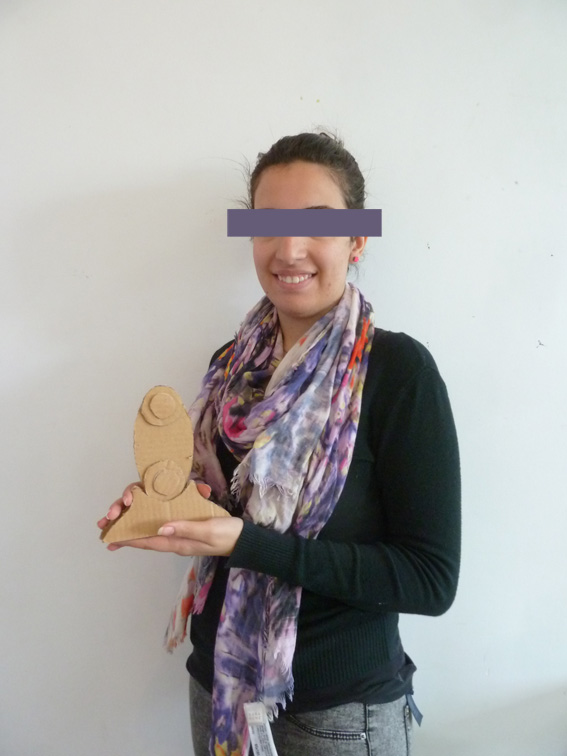
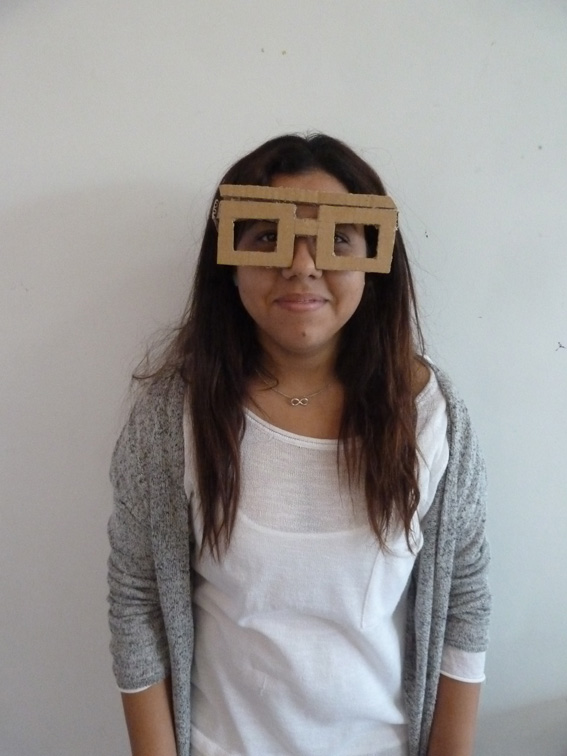
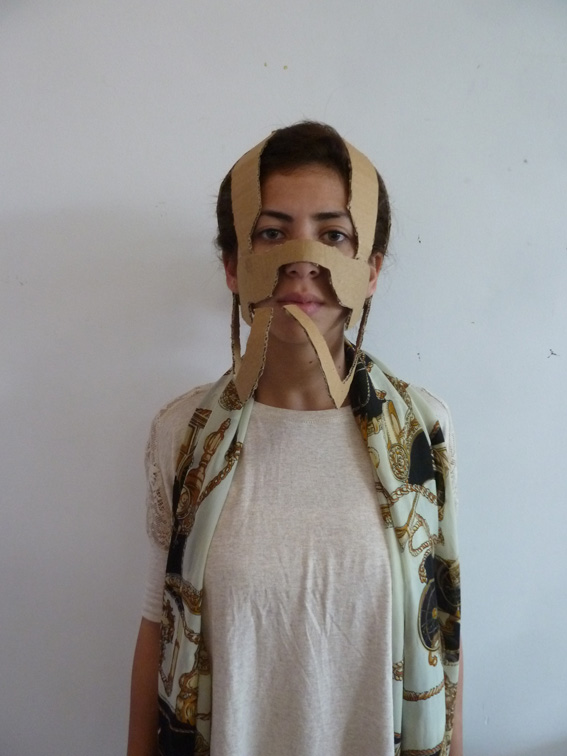
Now and then I give my students the assignment to develop tools which will improve a particular situation using advanced technology on a scientific base. A further restriction is that tools which are already know are not allowed – it has to be new.

 The vast majority of the students comes up with devices which either control the mind, transfer a state of mind or that translates someone’s mind. Also common are general translation devices (human – human, animal – human) or transportation devices through time and space. Of course all of these concepts need a reasoning based on scientific facts.

 If I ask the same students to analyse the daily routine and to come up with suggestions how to improve it, the outcome is normally not more than the sticky-finger-while-eating-chips, the annoying-traffic-jam-issue or other problems, which are directly related to the daily experience.

 So the same students come up with complete different approaches only because of a rephrased questions which points in the future. Why so some stick to the now if we do not open the mind to the then with a trick?

 Of course it is the teacher who points a directions for students who want to move on the safe side to get good grades. Nevertheless the version of the question which does not use the term future explicitly still leaves all the options to do so. It was not forbidden to come up with advanced and futuristic ideas.

 As one might know from previous articles: humans are a child of their culture. So the suggestion is that the culture keeps some students close to the floor. But once the word future is mentioned the floor is left in a very particular direction of taking influence on the mind. One might say that the one end is to be mind-controlled and the other end is to control the mind oneself. Cause and effect.